
Late June Special Session
June Special Session to Reshape Maryland’s Congressional Maps


SCOOP: Annapolis Preparing for June Special Session to Reshape Maryland’s Congressional Maps
The absolute hardest truth about Maryland politics is that the real game is rarely played during the 90 days of the regular legislative session. It happens in the quiet, calculated spaces right after the primary dust settles.
Multiple high-level sources have confirmed to The Maryland Wire that leadership in Annapolis is actively preparing to call the Maryland General Assembly back to town for a critical special session. The timing is locked in: lawmakers are expected to head back to the state capital immediately following the June 23 primary election day.
The targeted, fast-tracked session is slated to last approximately five days. While a late-summer return to the State House always triggers backroom deals, this particular session is designed to fundamentally alter the state’s federal electoral landscape ahead of the next cycle.
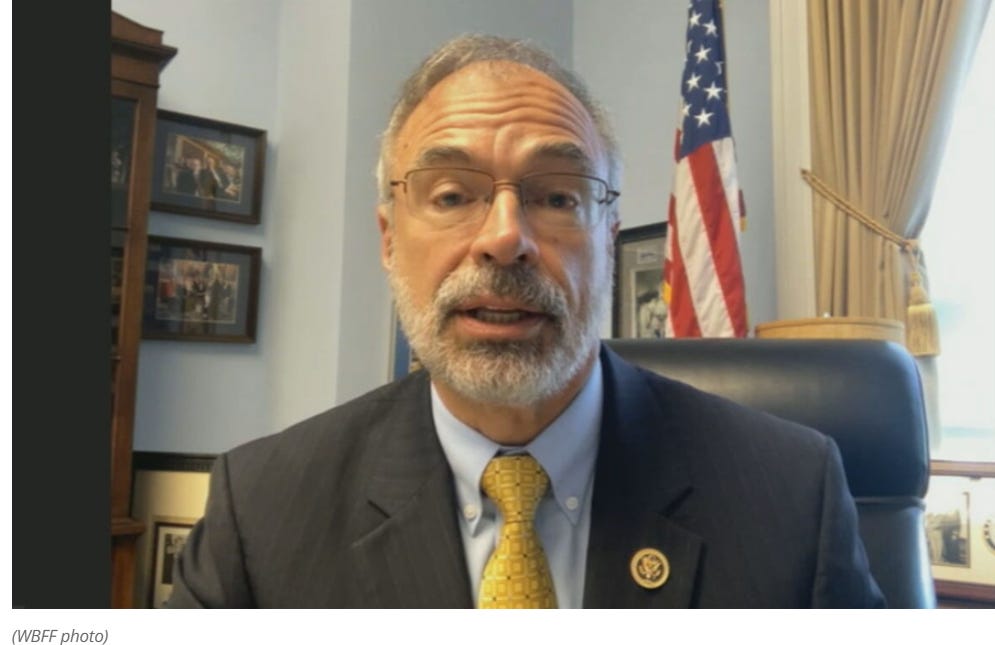
The Target: Drawing Andy Harris Out of the First District
The primary catalyst for this sudden return to Annapolis is the state’s lone Republican congressional seat. Top Democratic leadership is planning a coordinated effort to break up the 1st Congressional District on the Eastern Shore, with the explicit goal of shifting the boundaries to make it nearly impossible for U.S. Representative Andy Harris to maintain his hold on the seat.
However, the strategy this time around is more about long-term mechanics than an immediate map drawing. Because of previous state court rulings and a changing national legal landscape regarding the Voting Rights Act, the General Assembly isn’t expected to vote on a finished map next month. Instead, they are setting up the machinery.
Lawmakers are preparing to pass a Constitutional Amendment to place on the November ballot. This amendment will give the legislature much broader, explicit authority to bypass historical state court restrictions on mid-cycle redistricting, while routing all future map litigation directly to the Maryland Supreme Court. If voters approve the referendum this fall, the legislature will have a clean, legally insulated pathway to redraw the 1st District well before 2028.
Bill Ferguson’s Reversal and the Reality of D46
For months, Senate President Bill Ferguson resisted calls from the progressive base to reopen the congressional maps, fearing a protracted legal battle that could put the state’s current 7-1 Democratic map in jeopardy. But over the last few weeks, the political math shifted dramatically.
Ferguson has faced an unusually aggressive and vocal primary challenge in District 46 from boat captain and social media personality Bobby Lapin. Lapin centered a significant portion of his campaign on hammering the Senate President for blocking the congressional redraw.
With intense pressure mounting from both local primary voters and Governor Wes Moore’s administration, Ferguson pivoted. In late May, he officially acknowledged that active talks for a post-primary special session were underway.
While some backroom chatter suggests the Senate President was forced to caplulate to the executive branch to protect his flank, the reality looks much more like a calculated institutional compromise. By steering the special session toward a voter-approved ballot initiative rather than an immediate legislative map redraw, Ferguson manages to satisfy the progressive base, hand Governor Moore a win, and insulate his chamber from immediate legal chaos.
The Moving Parts: Disability Funding and the Legislative Agenda
While the primary focus of the five-day session is locked tightly onto election law and redistricting mechanics, rumors continue to swirl through the Annapolis corridors regarding a secondary item.
Whispers from reliable legislative sources indicate there may be a last-minute push to include a critical restructuring of state disability funding during the session.
Historically, Maryland special sessions are kept strictly bound to a single subject to avoid muddying the waters and to secure the necessary three-fifths supermajority required to pass constitutional amendments cleanly. Introducing a highly sensitive funding debate alongside a fierce partisan redistricting battle is a high-wire act, and leadership may ultimately decide to freeze the budget items until January. However, the situation remains fluid, and the funding piece is a wild card worth watching closely as delegates report back.
The View from the Shadow of Miller and Franchot
To understand why this special session is coming together so quickly, you have to understand the deep institutional history of the State House. For decades, Annapolis was defined by titanic personal feuds—most notably the legendary, long-running friction between the late Senate President Mike Miller and former Comptroller Peter Franchot.
In that older era, power was often wielded like a blunt instrument in committee chambers, completely detached from the realities of a politician’s home district. Bill Ferguson represents a different, younger generation of leadership, but he is learning the oldest lesson in Maryland politics: being powerful in the state capital doesn’t automatically build local ties or do the grueling work of campaigning back home.
When evaluating how tough to be on current leadership, it helps to listen to the true institutional giants. Professor Larry Gibson—the legendary civil rights warrior, University of Maryland law professor, and the mastermind who chaired Bill and Hillary Clinton’s campaigns in Maryland—frequently reminds observers of the sheer complexity of balancing state policy with local survival. Politics is an interconnected web of favors, timing, and compromise.
Ferguson’s willingness to adapt and coordinate this upcoming special session proves that while he may have faced a shaky spring, he still understands how to navigate the levers of power when the pressure is on.
What to Watch Next
The political vacuum will disappear the moment the primary polls close on June 23. Once the electoral fates of the individual delegates are decided, expect a joint announcement from Governor Moore, Senate President Ferguson, and House Speaker Joseline Peña-Melnyk to drop almost immediately.
The Maryland Wire will continue to track the vote counts and the exact language of the proposed constitutional amendment as the call to session becomes official.