
THE WAREHOUSE WAR
How DHS Quietly Seized a Pillar of Washington County’s Economy — And Why No One Saw It Coming

THE WAREHOUSE WAR
How DHS Quietly Seized a Pillar of Washington County’s Economy — And Why No One Saw It Coming
By Barry O’Connell
Maryland Wire
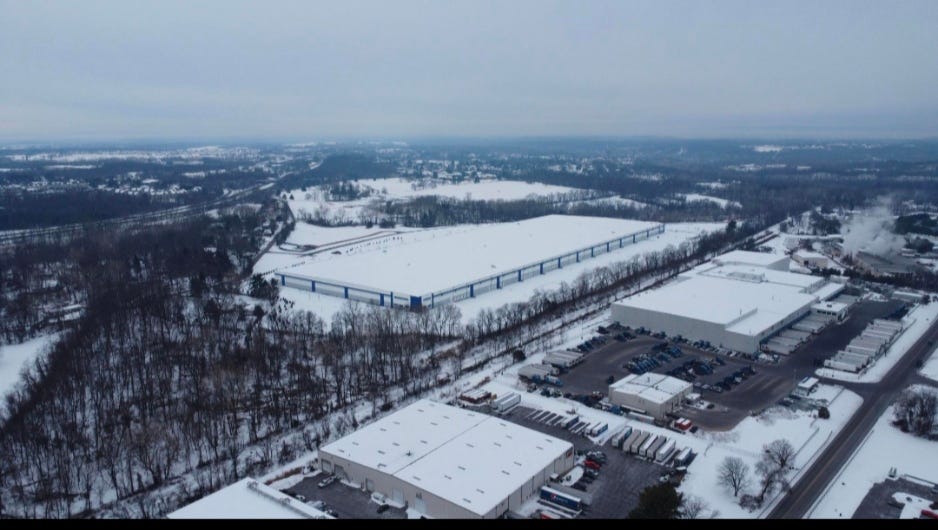
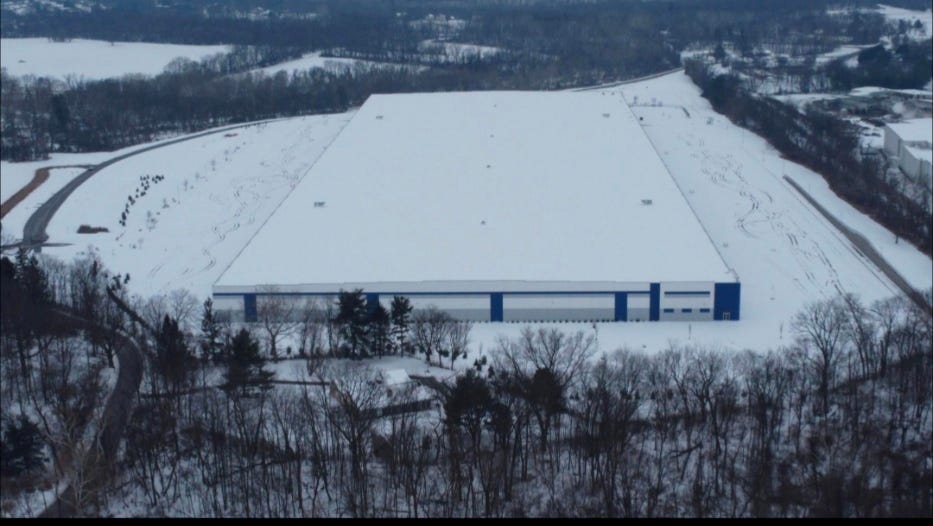
Washington County woke up this winter to discover that one of the largest warehouse facilities in the region — an 825,000‑square‑foot logistics hub on Wright Road — no longer belonged to the private sector. It now belongs to the federal government. More specifically, to the Department of Homeland Security. And more specifically still, to the one agency guaranteed to ignite a political firestorm in any Maryland community: ICE.
The price tag: $102.4 million.
The public notice: none.
The local consultation: zero.
In a county where logistics is the economic backbone, DHS didn’t just buy a building. It bought leverage. It bought land-use authority. It bought a foothold. And it did it without telling the people who live there.
This is the story of how it happened — and why Washington County residents are now asking whether the federal government just rewrote the region’s economic future without their consent.
A Warehouse County, Not a Detention County
To understand the shock, you have to understand the place.
Washington County’s warehouse sector is not a side industry. It is the industry.
The I‑81 corridor is the county’s economic spine — a distribution ecosystem that supports thousands of jobs, from forklift operators to trucking firms to small manufacturers who rely on fast freight.
A building of this size — 825,000 square feet, with the infrastructure to support high‑volume logistics — is not just another warehouse. It’s a regional anchor. The kind of facility that attracts satellite businesses, payroll, and long‑term investment.
So when DHS quietly bought it outright, the question wasn’t just why ICE?
It was why take this building off the private market at all?
A warehouse is an engine.
A detention center is a drain.
That’s not ideology. That’s economics.
The $102 Million End‑Run
Maryland passed the Dignity Not Detention Act in 2021, banning state and local governments from entering into new agreements to detain immigrants. The law was designed to prevent exactly this: the quiet expansion of ICE detention capacity inside Maryland’s borders.
But the law has a loophole big enough to drive a federal procurement truck through.
It restricts contracts.
It does not restrict federal ownership.
So DHS didn’t negotiate with Washington County.
It didn’t sign an agreement with the state.
It didn’t need permission from anyone.
It just bought the building.
And by doing so, it sidestepped the entire legal framework Maryland put in place to prevent new detention centers.
This is the part that has state officials — including Gov. Wes Moore — openly frustrated. The state passed a law. The federal government found a workaround. And the people who live in Washington County were never told what was coming.
Infrastructure on the Brink
The warehouse sits in a part of the county where water and wastewater systems are already strained. Local officials have been warning for years that capacity is tight, expansion is expensive, and growth must be managed carefully.
A detention center housing up to 1,500 people is not careful growth.
It is a 24/7, high‑demand, high‑impact facility that:
- consumes water at industrial scale
- produces continuous wastewater
- requires emergency medical services
- increases traffic on rural roads
- demands local public safety support
And unlike a warehouse, it does not generate tax revenue, supply-chain activity, or private-sector investment to offset those costs.
This is why Moore’s office raised the alarm.
This is why residents are protesting.
This is why the county is scrambling for answers.
The infrastructure wasn’t built for this.
And no one asked whether it could handle it.
The Transparency Vacuum
If there is one theme that unites every stakeholder — from activists to business owners to the governor — it is this:
No one was told anything.
The purchase did not appear on county agendas.
Local officials say they were blindsided.
The Maryland delegation demanded documentation after the fact.
Residents learned about it from reporters and protest organizers.
This is not how major federal land-use decisions are supposed to work in a community of 150,000 people. Especially not when the decision involves a facility that could reshape the county’s economic identity.
The secrecy is not incidental.
It is the story.
A Community Drawn Into a National Fight
Washington County is not a place that typically finds itself at the center of national immigration battles. It is a logistics hub, a manufacturing corridor, a region that has spent decades rebuilding its economic base after the collapse of heavy industry.
But ICE changes the equation.
Nearly one in ten county residents is Hispanic.
Local advocates warn that a detention center sends a message — intended or not — that the county is now a federal enforcement zone.
Whether that message is fair or not is almost beside the point.
What matters is that the community never got to decide.
The Real Question: Who Controls Maryland’s Economic Future?
This is bigger than one warehouse.
Bigger than one agency.
Bigger than one county.
The DHS purchase raises a structural question Maryland has not yet confronted:
Can the federal government unilaterally reshape local economies by buying up private-sector infrastructure — and does the state have any recourse when it happens?
If the answer is yes, then the Dignity Not Detention Act is symbolic.
If the answer is yes, then local planning authority is conditional.
If the answer is yes, then Washington County is the test case for a new federal strategy.
And if the answer is yes, then every county executive, mayor, and economic development director in Maryland just got a new item on their risk assessment list.
The Warehouse War Has Only Just Begun
Hagerstown Rapid Response is organizing.
Residents are protesting.
State officials are demanding answers.
The county is scrambling to understand what it can legally do.
And DHS is saying nothing.
This is not a story about immigration policy.
It is a story about power — who has it, who doesn’t, and what happens when the federal government decides to redraw the map without telling anyone.
Washington County didn’t pick this fight.
But it has one now.
And the rest of Maryland should pay attention, because the next warehouse DHS buys might not be in Williamsport.
Great breakdown of the issues here. They are 100% wanting this location to traffic people using Hagerstown's accessibility to multiple forms of transportation. It's sick.
Thank you for getting this information out there. What is really scary is the proximity to railroad tracks. The Washington County Commissioners have failed us.